
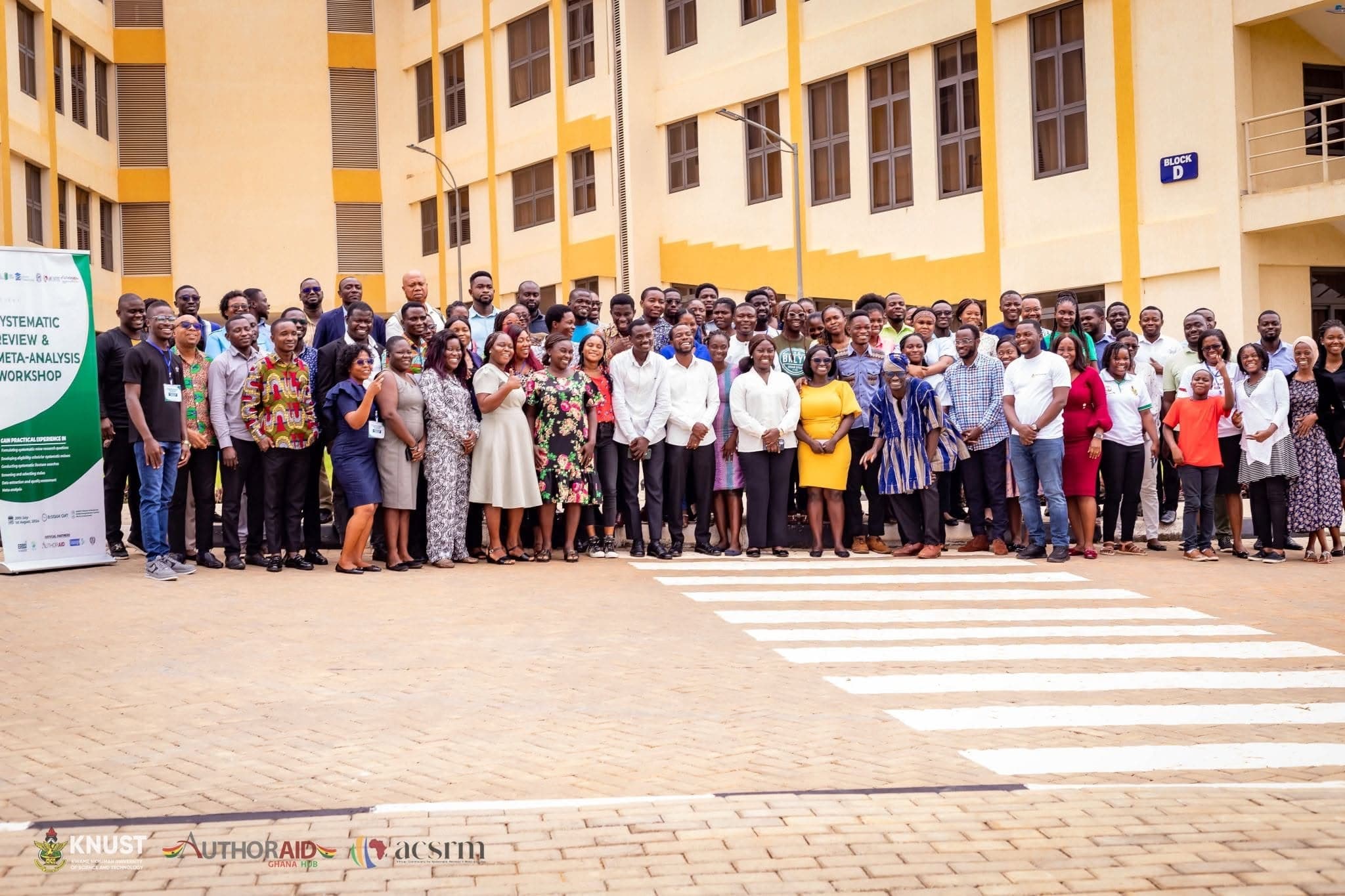
About SRN
Better evidence, built where it's needed most.
Formerly ACSRM, SRN launched in 2022 as a network strengthening the capacity of researchers and policymakers across Africa and beyond to produce, interpret, and apply systematic reviews and meta-analyses that stand up to scrutiny and inform real-world decisions.
Systematic Reviews Network (SRN), formerly known as the African Community for Systematic Reviews and Meta-analyses (ACSRM), is a registered charity established to support the production, dissemination, and use of systematic reviews and meta-analyses across low- and middle-income countries (LMICs). SRN is incorporated as a company limited by guarantee and registered in Nigeria, while operating across Africa and other LMICs through capacity-building programmes, research collaborations, and knowledge-sharing activities. SRN was officially launched on 8 December 2022 at the University of Rwanda, Rwanda, and on 19 December 2022 at the University of Lagos, Nigeria, through seed funding received from the International Network for Advancing Science and Policy (INASP).
Our vision
To bridge evidence gaps in LMICs and transform lives by guiding decisions with robust, context-specific evidence.
Our mission
To empower researchers from academia and research institutions, especially early-career researchers, with the skills, tools, and resources needed to successfully conduct systematic reviews and meta-analyses.
To empower systematic review users, including scientists, government agencies, expert panels, patients, policymakers and health-care advocates, with the knowledge and skills needed to critique, understand, interpret and use systematic reviews and meta-analyses.
To cooperate and work with partners, stakeholders, research institutions, and academic institutions to promote and improve the use and production of systematic reviews and meta-analyses.
What we do
SRN builds capacity for systematic reviews and meta-analyses in settings where that capacity is scarce. We work with researchers, institutions, and policymakers to strengthen how evidence is produced, interpreted, adapted, and used in real decisions. We do this in several ways:
Training: Structured courses that take researchers from a clear, answerable question through to a completed review, while also helping policymakers understand how to interpret and use review evidence.
Mentorship: Pairing researchers with experienced reviewers through the full process of a live review, so methodological choices are made with guidance rather than guesswork.
Evidence co-adaptation: Working with policymakers and other decision-makers to interpret review findings, adapt evidence to local contexts, and turn research into practical options for policy, programming, and implementation.
Open resources: Guides, templates, and recorded sessions, freely available to anyone, because good methods should not sit behind a paywall.
Why it matters
A systematic review answers a clear question by finding and appraising the relevant studies with explicit, reproducible methods. Every decision is documented, so another researcher can follow the same steps and reach the same place. That is what separates a review from an opinion, and it is why reviews carry weight in policy and practice.
The skills to produce and use that evidence are unevenly distributed. Where they are scarce, decisions get made on weaker grounds, and the questions that matter most locally are the least likely to have been reviewed at all. Building the capacity in place, rather than importing conclusions drawn elsewhere, is the work.
Our values
Passion. We have a sense of enthusiasm for our work and for the people around us.
Teamwork. We operate on the principle of teamwork because we believe people are capable of building something bigger than themselves when they unite.
Integrity. Everyone who represents our team is committed to acting in a way that is consistent with our values.
Accountability. We accept responsibility for our actions and inactions, because it is the best way to build trust internally and externally.
Quality. We uphold the highest standards, because how well an organisation crafts its goods and services determines how successful it is.
Diversity and inclusion. We prosper by integrating a variety of backgrounds and experiences into a setting where everyone has an equal opportunity.
Collaboration. We understand the importance of evidence in shaping practice in the global community, so we promote working with different stakeholders towards achieving this aim.
Equity. We are determined to ensure fairness in all that we do at all times.
Bring evidence synthesis training to your institution.
Host a workshop, sponsor researchers, or co-create evidence with SRN. We work with institutions and funders across low- and middle-income countries.
Partner with SRN